
Food Handler Certificate New South Wales
Applying for café, restaurant or hospitality jobs in Sydney, Newcastle or on the Central Coast? A food handler certificate helps your application stand out and shows employers you already understand the basics of safe food handling — before you've even started. Our free online food handler training for New South Wales covers the essentials, you can study and sit the test whenever it suits you, and your certificate arrives by email when you pass.
Training & test are free — certificate AUD $29.99, pay only if you pass.
Valid in every Australian state & territory

Why food handlers in NSW choose us
Free training before payment
Read everything and test yourself at no cost.
Pay only after passing
No payment until you've passed the assessment.
Instant certificate
Generated immediately after successful payment.
Secure Stripe payment
Card details handled securely by Stripe.
Email delivery
Your certificate is also emailed to you.
Certificate verification
Each certificate has a public verification page.
Food safety jobs in New South Wales
From Sydney cafés and CBD restaurants to coastal pubs, food trucks and catering, NSW's hospitality scene is always hiring — and a food handler certificate helps you apply for roles like these:
Hospitality hotspots in New South Wales
The café strips, bars, restaurants and markets where food handlers are in demand — and where your certificate helps you get hired.
Sydney CBD & Inner City
High-volume cafés, hotels and restaurants around the city, Surry Hills and Darlinghurst.
Newcastle
A growing bar, brewery and café scene around the harbour and Darby Street.
Wollongong & the Illawarra
Beachside cafés, pubs and casual dining along Crown Street.
Byron Bay & the North Coast
Tourist-driven cafés, juice bars and beach restaurants.
The Central Coast
Family cafés, clubs and takeaway venues from Gosford to The Entrance.
Regional NSW
Country pubs, RSL clubs and main-street cafés in Wagga, Dubbo and beyond.

What the training covers
17 clear modules covering the Australian food handling essentials — free to read before you take the test.
Food safety in New South Wales
Food safety in New South Wales is overseen by the NSW Food Authority, and food businesses are expected to make sure their staff understand safe food handling. Completing this online food handler course is a practical, low-cost way to build those skills and show employers across Sydney, Newcastle and regional NSW that you're job-ready. Some NSW businesses also appoint a trained Food Safety Supervisor — this training is a great foundation if you're working towards a food handling role.
Food safety guidance from NSW Food Authority
Popular with food workers in Sydney, Newcastle, Wollongong, Central Coast, Parramatta and Wagga Wagga.
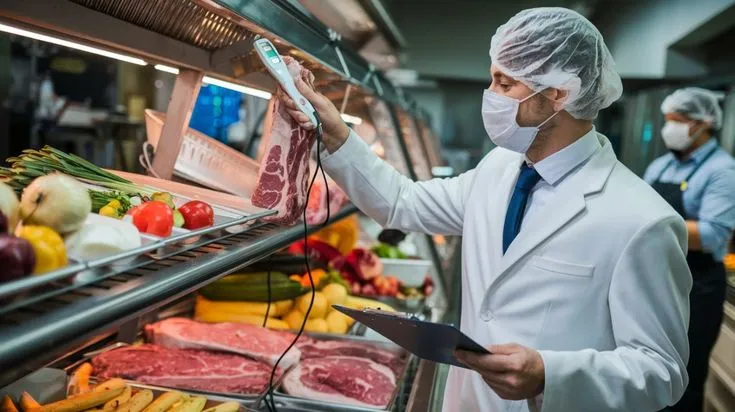
Who counts as a food handler in New South Wales
A food handler is anyone who works with food or with surfaces likely to touch food — not just chefs. In a NSW venue that covers the barista steaming milk, the kitchen hand washing produce, the waiter carrying plates, the deli assistant slicing smallgoods and the volunteer plating up at a community event. The NSW Food Authority takes the same broad view the national Food Standards Code does: if what you do could affect whether food is safe to eat, you are handling food.
That matters because the legal duty sits on the business, not on you. A Sydney café or a Newcastle pub has to be able to show its people know what they are doing. Turning up to an interview already trained flips that obligation into an advantage — the employer gets one less thing to organise, and you get an easier yes.
What Standard 3.2.2A means for NSW food businesses
Standard 3.2.2A, Food Safety Management Tools, is a national standard that began applying on 8 December 2023 and is enforced in New South Wales by the NSW Food Authority and local councils. It targets businesses that handle unpackaged, potentially hazardous, ready-to-eat food — the food most likely to make someone sick if it is mishandled. Category One businesses, which covers food service and catering, must use three tools: a trained Food Safety Supervisor, food handler training, and substantiation that key controls are actually happening. Category Two, certain retailers selling ready-to-eat food they did not make on site, must use the first two.
Read the second tool carefully, because it is where a food handler certificate fits. The standard requires food handlers to have completed training in specified food-safety matters; unlike the Food Safety Supervisor element, it does not require an accredited course from a registered training organisation. Our training covers those fundamentals and our certificate records that you completed it — but the compliance obligation stays with the business, and only your employer can judge whether what you have satisfies their obligations.
Food safety certificates in NSW: supervisor versus food handler
New South Wales is one of the states with a specific Food Safety Supervisor rule: certain retail food businesses must appoint a trained FSS, a government-recognised role with its own qualification that generally needs renewing every five years. One person holds it for the premises. It is not something every staff member needs, and it is not what our course provides.
Food handler training is the other thing entirely — it is for everyone who touches food, it has no legal expiry, and it is about your own skills rather than the venue's licence. If a NSW job ad asks for a food safety certificate, it almost always means the second kind. If it explicitly says Food Safety Supervisor, you need an accredited provider, not us. Our certificate is a private certificate of completion and says so on its face.
How a NSW employer checks your certificate
Every certificate we issue carries a unique ID, and anyone can check it at our verification page without an account or a login. A hiring manager in Surry Hills or a venue manager in Wollongong types the ID and sees whether it is genuine, whose name is on it and when it was completed. That is deliberately simple: the easier it is to confirm, the more useful the certificate is when you attach it to an application.
Keep the PDF somewhere you can reach on your phone, and put the certificate ID on your resume next to the training. NSW hospitality hires fast, often between shifts, and being able to produce proof on the spot is worth more than a certificate sitting in an old inbox.
Sources
Food handler training in more cities
NSW food handler training FAQs
Is a Food Handler Certificate required in NSW?
There's no single law that forces every food worker in New South Wales to hold a Food Handler Certificate, but the rules do expect food-safety knowledge. Under the national Food Standards Code, NSW food businesses — overseen by the NSW Food Authority — must make sure anyone handling food has the skills and knowledge needed for their role. Many businesses meet this by having staff complete food handler training, and certain retail food businesses must also appoint a trained Food Safety Supervisor, which is a separate, government-recognised role. Our course is a private Food Handler Certificate of completion — not a government-issued certificate and not the Food Safety Supervisor certificate. Even where it isn't strictly mandatory, it's a practical, low-cost way to prove you understand safe food handling and to stand out when you apply for café, restaurant, catering or food-retail jobs across Sydney, Newcastle, Wollongong and regional NSW.
What jobs require a Food Handler Certificate in NSW?
Across New South Wales, most roles that involve preparing, cooking, serving or packing food expect food-safety knowledge, and a Food Handler Certificate is an easy way to show you have it. It's well suited to café and barista staff, kitchen hands and chef's assistants, restaurant and bar workers, food truck and market stallholders, catering and events crews, supermarket deli and food-retail staff, and aged-care or childcare kitchen roles. From busy Sydney CBD cafés and Surry Hills restaurants to Newcastle's harbourside venues, Wollongong's Crown Street and Central Coast clubs, NSW hospitality employers hire constantly and often shortlist applicants who already understand hygiene, cross-contamination and temperature control. Some businesses must also have a designated Food Safety Supervisor on site, which is a separate qualification. While not every NSW job legally demands a certificate, completing the training signals you're job-ready and serious about food safety — a real advantage when you're competing for hospitality work.
Can I get a Food Handler Certificate online in NSW?
Yes. The whole process is online, so you can earn your Food Handler Certificate from anywhere in New South Wales — Sydney, Newcastle, Wollongong, Parramatta, the Central Coast or regional towns like Wagga Wagga — without attending a classroom. You read the free training modules at your own pace, then sit a free multiple-choice test covering the food-safety essentials: personal hygiene, handwashing, cross-contamination, temperature control, cleaning and allergens. The pass mark is 75%, and you can retake the test for free as many times as you need. Once you pass, your private Food Handler Certificate of completion is generated instantly and emailed to you, with a unique ID an employer can verify online. Studying and testing cost nothing — you only pay if you pass and want the certificate — so it's a convenient, low-pressure way for NSW job seekers to get certified on a phone or laptop, whenever it suits you.
How long does a Food Handler Certificate last in NSW?
Our private Food Handler Certificate of completion doesn't have a legal expiry date in New South Wales — once you pass, it confirms you completed the training on that date. That said, food-safety knowledge should be kept current, so refreshing your training every two to three years is good practice, and many NSW employers set their own renewal periods and may ask you to redo it. It's worth not confusing this with the separate NSW Food Safety Supervisor certificate, which is a government-recognised qualification that does need renewing (generally every five years) for the businesses that require one. Because our training and test are free, refreshing your knowledge later costs nothing unless you want a new certificate issued. If you're applying for hospitality, café or food-retail work around Sydney, Newcastle or regional NSW, a recently completed certificate shows employers your food-safety knowledge is up to date.
How much does a Food Handler Certificate cost in NSW?
The training and the test are completely free in New South Wales — you can work through every module and attempt the assessment without paying anything. You only pay AUD $29.99 if you pass and want to receive your Food Handler Certificate of completion. There are no subscriptions, no hidden fees and no charge to retake the test, so there's no risk in trying it first. Payment is a one-off, processed securely by Stripe, and your certificate is generated instantly and emailed to you the moment payment clears, complete with a unique ID employers can verify online. For NSW job seekers — whether you're chasing café work in Sydney, a kitchen role in Newcastle or catering shifts on the Central Coast — it's a low-cost way to add a food-safety credential to your resume and stand out, paying only once you've actually passed and decided you want the certificate.
Does Standard 3.2.2A apply to me in NSW?
Standard 3.2.2A is a national standard that began applying on 8 December 2023, and in New South Wales it's enforced by the NSW Food Authority and local councils. It applies to the business, not to you personally. Businesses serving unpackaged, potentially hazardous, ready-to-eat food fall into Category One — food service and catering, which must use a trained Food Safety Supervisor, food handler training and substantiation that key controls are happening — or Category Two, certain retailers, which must use the first two. The food handler training element is why NSW employers ask more often about training than they used to. It requires handlers to have completed training in specified food-safety matters, and unlike the Food Safety Supervisor element it doesn't demand an accredited course. Our training covers those fundamentals, but the compliance obligation stays with the business and only your employer can judge whether it meets their needs.
How does a NSW employer verify my certificate?
Every certificate we issue carries a unique ID, and anyone can check it on our verification page without an account, a login or a fee. A hiring manager in Surry Hills or a venue manager in Wollongong enters the ID and immediately sees whether the certificate is genuine, whose name is on it and when the training was completed. That matters because NSW hospitality hires quickly, often between shifts — a credential someone can confirm in seconds is far more useful than a PDF they have no way to check. Put the certificate ID on your resume next to the training and keep the PDF somewhere you can reach on your phone. If an employer needs a Food Safety Supervisor certificate instead, that's a separate government-recognised qualification from a registered training organisation, and our verification page won't be what they're after.
Get certified in New South Wales
Read the training and attempt the test for free. Only pay AUD $29.99 if you pass and want your certificate.
Take the Free Test